

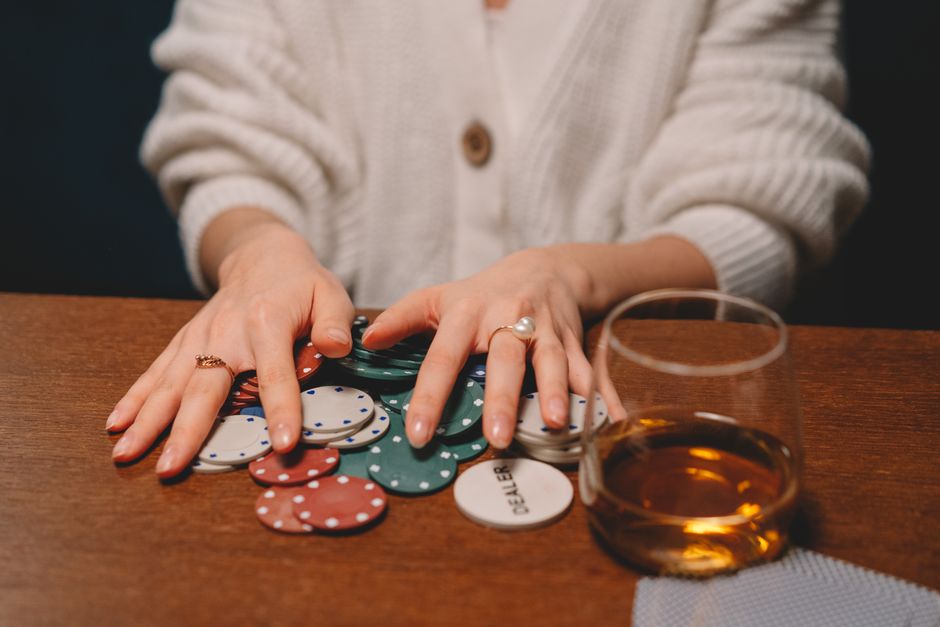
Most players think they lose because they're unlucky. The truth is more boring and more useful: they lose because the games are built with a mathematical edge baked into every spin, deal, and bet. Once you understand how that edge works — and where it varies wildly from game to game — you stop treating gambling as a guessing game and start treating it as a cost-of-entertainment decision. That shift changes everything about how you play.
Let's walk through the actual mechanics behind slots, table games, poker, and sports betting, and where a smart player can claw back the most value.
Every casino game has a house edge, expressed as a percentage of each bet the casino expects to keep over the long run. It varies enormously:
Notice the gap. Playing blackjack well instead of pulling a slot lever is the difference between handing the casino a dollar per hundred in action versus eight dollars. Over hundreds of hours, that's not a rounding error — it's the entire outcome.
Slot machines run on random number generators. Each spin is independent. A machine that just paid out a jackpot is not "cooling off," and one that hasn't paid in hours is not "due." That belief — known as the gambler's fallacy — is the single most expensive myth in the industry.
What actually matters on a slot is Return to Player (RTP) and volatility. An RTP of 96% means the game returns $96 for every $100 wagered over millions of spins. Volatility describes how that return is delivered:
Two practical tips. First, always check the RTP in the game's info screen — many online slots list it openly, and 96%+ is a fair benchmark. Second, match volatility to your bankroll. If you're playing with $50, a high-volatility slot will gut you before it ever pays. Stick to low or medium volatility and treat it as paid entertainment, not a plan. Before making a choice, it helps to review สล็อตเว็บตรง.
This is where gambling stops being pure luck. Blackjack played with basic strategy — memorizing the statistically optimal move for every hand combination — lowers the house edge to around 0.5%. Add card counting and, in theory, you can push the edge into player territory. That's exactly why casinos reshuffle more often, use multiple decks, and ask "shuffle-savvy" players to leave.
Baccarat rewards no skill but is quietly one of the fairest bets on the floor if you stick to the banker. Craps is similar — the pass line is solid, but the real value hides in odds bets, which carry zero house edge. The catch: odds bets are only available behind a pass line wager, so you're always paying a small toll for the privilege.
Before you sit down, ask: what's the house edge on this bet? If you don't know the number, you don't know what you're actually risking. Skip side bets and prop bets — the "perfect pairs," "lucky ladies," and similar wagers are cosmetic entertainment with edges often north of 10%.
Poker is fundamentally different. You're playing against other players, not the casino. The house simply takes a rake — usually 5%–10% of each pot up to a cap — or charges a flat seat fee. That structural difference means poker is beatable by skilled players in a way slots never will be.
But "beatable" doesn't mean "easy." The rake creates a leak. In low-stakes cash games, a $6 cap on a $60 pot is a massive drag, and tight-aggressive fundamentals are mandatory just to break even. Online micro-stakes games are typically tougher than live $1/$2 because the players are younger, sharper, and playing with tracking software.
A few hard truths for aspiring grinders:
Sportsbooks don't need to be right about who wins — they need balanced action. Their profit comes from the vig (or juice): the built-in commission on each side of a bet. A typical point spread is priced at -110 on both sides, which implies a house edge around 4.5%. Even "fair-seeming" moneylines carry it.
This is why long-shot parlays are traps. Correlated legs with inflated odds may look lucrative, but the compounded house edge on a five-leg parlay can push the effective margin past 20%. Sharp bettors specialize, track line movement, and bet selectively. Everyone else is funding the market.
You're not going to beat the house at slots, and no betting system changes negative expected value into positive expected value. But you can absolutely control three things: which games you play, how much edge you surrender, and how long your money lasts. Prefer blackjack and baccarat over keno. Check RTP on every slot. Play tight in poker. Treat sports betting with a margin-obsessed eye. Set a loss limit before you log in and treat it as an entertainment budget, not an investment plan.
The players who get hurt are the ones who chase losses and believe the game is fair. The house edge never sleeps — but your awareness can keep it from becoming your budget's worst enemy. Play deliberately, and at minimum, you'll get real entertainment for your money instead of a slow bleed you never saw coming.

Crispwharf We spend our time finding what works so you don't have to, and sharing exactly what made the difference.

Crispwharf We spend our time finding what works so you don't have to, and sharing exactly what made the difference.

Compare sharp, mellow and mouth-puckering salt and vinegar crisps to find the right level of tang for your taste.

Comments
ALina Kelian
19th May 2018 ReplyCrispwharf Simple, genuine and looked after with care — the kind of place worth returning to. ullamco laboris nisi ut aliquip ex ea commodo consequat.
Rlex Kelian
19th May 2018 ReplyCrispwharf Real stories, useful guides and the occasional recommendation, all in one calm corner of the web. ullamco laboris nisi ut aliquip commodo.
Roboto Alex
21th May 2018 ReplyCrispwharf An honest, everyday look at the things that make life a little better — with advice you can actually use. ullamco laboris nisi ut aliquip ex ea commodo consequat.